Thank you! Your submission has been received!
Oops! Something went wrong while submitting the form.

































No Results found.
Please try different keywords.
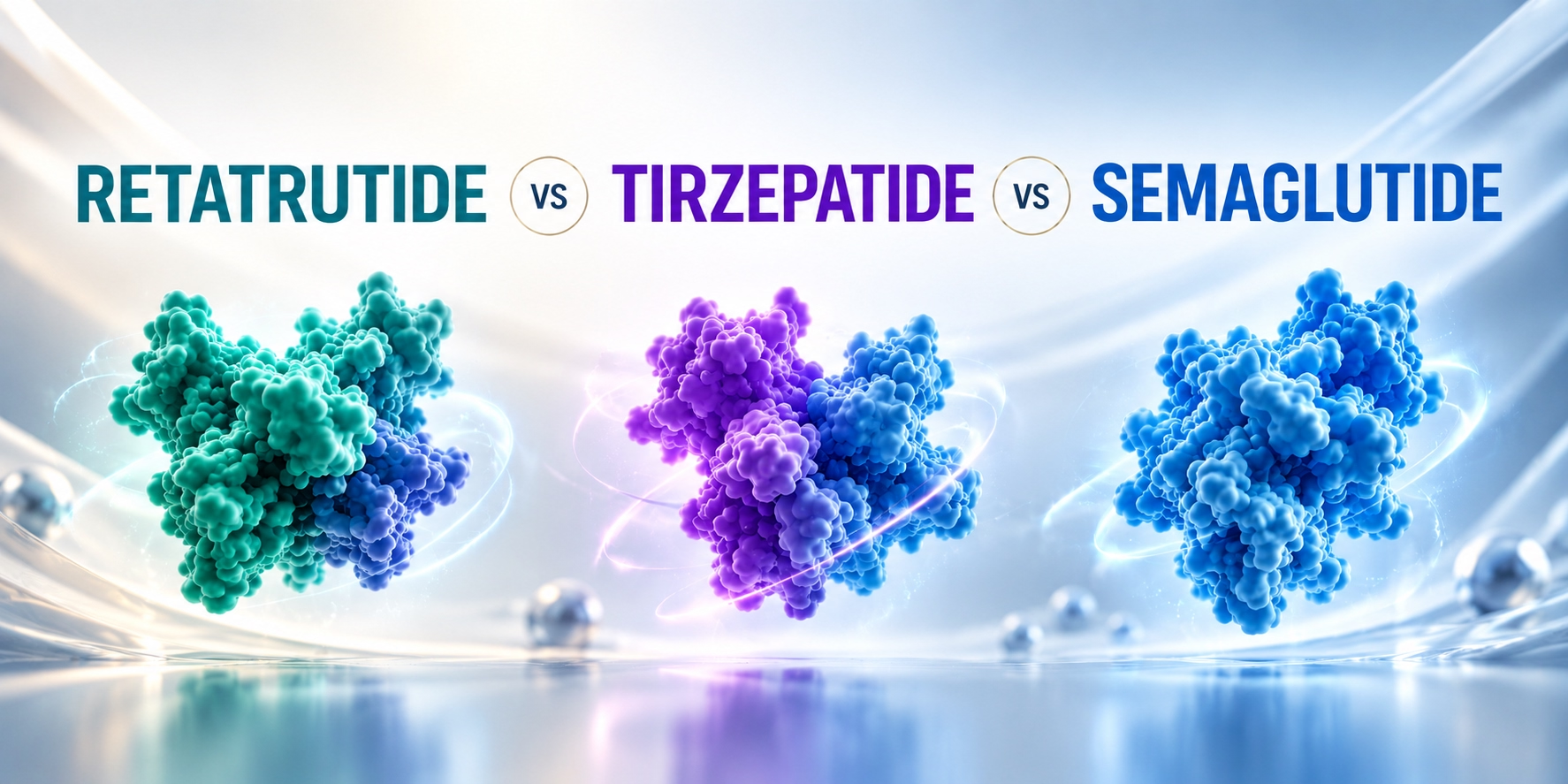
What Makes Them Different?
The key difference lies in the number and type of receptors they activate. These receptors are involved in appetite regulation, glucose metabolism, food intake, and other aspects of metabolic function.
RETATRUTIDE: Triple Agonist
Retatrutide is a triple receptor agonist that targets GLP-1,GIP, and glucagon receptors within a single molecule. This multi-pathway mechanism is designed to influence several aspects of metabolic regulation simultaneously.
Retatrutide is currently being investigated for its effectson appetite, energy balance, and weight management, as well as its potential role in broader cardiometabolic health.
TIRZEPATIDE: Dual Agonist
Tirzepatide is a dual receptor agonist targeting both GLP-1and GIP receptors. By activating two metabolic pathways, it expands metabolic signaling beyond GLP-1 alone.
Its actions help regulate appetite and calorie intake, while also supporting glucose-dependent insulin secretion and broader metabolic regulation.
SEMAGLUTIDE: Single Agonist
Semaglutide is a GLP-1 receptor agonist. It activates GLP-1receptors involved in appetite regulation, calorie intake, and glucose-dependent insulin secretion.
Through this pathway, semaglutide can help regulate appetite and food intake while supporting glucose control and metabolic health.
Conclusion
The evolution from Semaglutide → Tirzepatide → Retatrutide reflects a shift from single- to multi-receptor approaches in metabolic and weight-management research.
However, targeting more receptors does not necessarily mean atherapy is better for everyone. The appropriate option should be based on individual health, treatment goals, response, and medical evaluation.